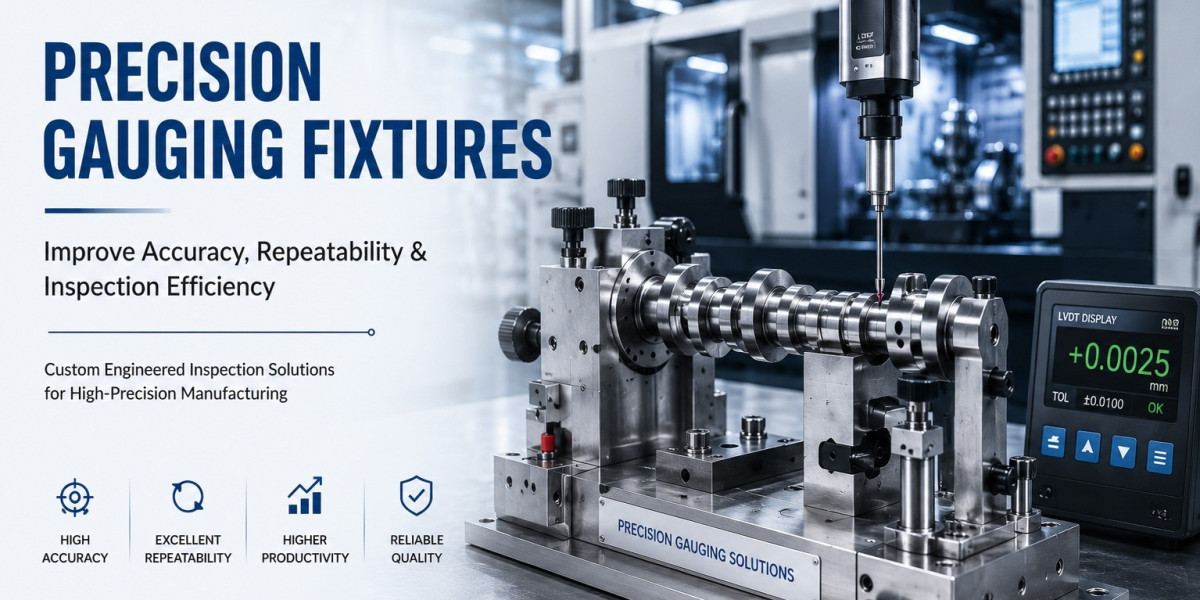

What are Air Gauges?
Air gauges are precision measurement systems that use compressed air to measure internal or external dimensions without applying physical contact pressure on the measuring surface.
Instead of relying on mechanical movement, these systems compare airflow changes between the gauge head and the workpiece. Even minute dimensional changes alter airflow, enabling extremely accurate measurements.
Because there is minimal contact with the component, air gauges are ideal for measuring delicate, finely finished, or high-precision parts.
Industries commonly using air gauges include:
- Automotive
- Bearing manufacturing
- Aerospace
- Medical equipment
- Precision engineering
- Hydraulic component manufacturing
What are Mechanical Gauges?
Mechanical gauges use physical contact between the measuring element and the component surface.
Common examples include:
- Dial gauges
- Bore gauges
- Plug gauges
- Snap gauges
- Ring gauges
Mechanical gauges are widely used because they are easy to operate, cost-effective, and suitable for general production inspections.
For many manufacturing applications, mechanical gauges continue to provide dependable dimensional verification.
Air Gauges vs Mechanical Gauges
Measurement Accuracy
Air gauges provide exceptional repeatability and can detect extremely small dimensional variations. Since measurements are based on airflow rather than mechanical movement, operator influence is significantly reduced.
Mechanical gauges offer excellent accuracy for many applications but can be affected by operator pressure, wear, and component handling.
Surface Protection
Air gauges exert almost no physical force on the workpiece.
This makes them ideal for:
- Ground components
- Honed bores
- Precision shafts
- Finished bearing races
Mechanical gauges involve direct contact, making them more suitable for components that can tolerate repeated physical inspection.
Inspection Speed
High-volume production requires rapid inspection.
Air gauging systems deliver measurements almost instantly, allowing operators to inspect hundreds or thousands of components efficiently.
Mechanical gauges generally require more manual positioning and interpretation.
Repeatability
Repeatability is one of the biggest advantages of air gauging.
Since airflow remains consistent, results are highly repeatable even across different operators and shifts.
Mechanical gauges depend more heavily on operator skill and measuring technique.
Maintenance
Mechanical gauges contain moving components that may wear over time and require periodic replacement.
Air gauges have fewer moving parts, although they require clean, regulated compressed air to maintain consistent performance.
When Should You Choose Air Gauges?
Air gauges are ideal when:
- Extremely tight tolerances must be maintained.
- High production volumes require fast inspection.
- Components have precision-finished surfaces.
- Low measurement variation is essential.
- SPC data collection is required.
- Industry 4.0 integration is planned.
When are Mechanical Gauges the Better Choice?
Mechanical gauges remain an excellent option for:
- General machining operations
- Lower production volumes
- Cost-sensitive applications
- Shop-floor inspections
- Basic dimensional verification
Many manufacturers successfully use both technologies depending on component requirements.
Benefits of Air Gauging Systems
Modern air gauging offers numerous advantages:
Higher Accuracy
Exceptional repeatability supports tighter manufacturing tolerances.
Faster Inspection
Rapid measurements reduce cycle times.
Reduced Operator Influence
Measurement consistency improves across shifts.
Non-Destructive Measurement
Minimal contact protects finished components.
Longer Gauge Life
Reduced wear increases equipment longevity.
Better Process Control
Reliable data supports Statistical Process Control (SPC).
Applications of Air Gauges
Air gauges are widely used for measuring:
- Engine cylinder bores
- Bearing races
- Connecting rods
- Hydraulic cylinders
- Valve guides
- Precision sleeves
- Gear housings
- Automotive transmission components
Why Modern Manufacturing Prefers Air Gauging
As manufacturing tolerances continue to become tighter, inspection technology must evolve alongside production processes.
Many manufacturers are replacing traditional inspection methods with air gauging systems because they provide:
- Better repeatability
- Faster inspections
- Lower rejection rates
- Improved process capability
- Digital measurement integration
These benefits help reduce manufacturing costs while improving overall product quality.
Choosing the Right Air Gauges Manufacturer India
Selecting the right supplier involves more than comparing products.
Look for a manufacturer that offers:
- Engineering consultation
- Application-specific solutions
- Calibration support
- Installation assistance
- Operator training
- Long-term technical service
Working with an experienced partner ensures the gauging system matches your production requirements rather than simply fitting standard specifications.
Why Versa Controls?
Versa Controls has over two decades of experience providing precision measurement solutions for Indian manufacturing industries.
The company develops customized gauging systems for automotive, aerospace, bearing, railway, defence, and precision engineering applications.
Its product portfolio includes:
- Air Gauging Systems
- Digital Gauging Displays
- LVDT Measurement Systems
- Diameter Gauges
- Connecting Rod Gauges
- Wireless Gauging Solutions
- Gauging Fixtures
- Customized Inspection Systems
With thousands of installations across India, Versa Controls continues to support manufacturers through engineering expertise, calibration services, and responsive technical assistance.
If you're also exploring complete precision measurement solutions, read our detailed guide on gauges manufacturer India to understand how choosing the right gauging partner can improve inspection accuracy, reduce measurement variation, and enhance manufacturing productivity.
Conclusion
Both air gauges and mechanical gauges play important roles in industrial inspection. Mechanical gauges provide dependable performance for routine measurement tasks, while air gauges offer superior accuracy, repeatability, and speed for high-precision manufacturing.
As industries continue adopting advanced manufacturing practices, air gauging systems have become an essential part of quality assurance.
Choosing the right measurement solution—and partnering with an experienced manufacturer—helps manufacturers improve productivity, reduce inspection errors, and consistently deliver high-quality products.